Course: VGA Pong game on FPGA
$59VHDL Pong game implementation course teaching how to control a VGA monitor from an FPGA, including sync signals, gameplay, and displaying images over VGA.

Courses that are offered as a one-time purchase.
Showing 1–12 of 13 results
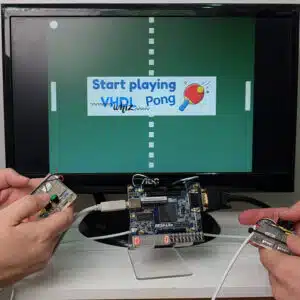
VHDL Pong game implementation course teaching how to control a VGA monitor from an FPGA, including sync signals, gameplay, and displaying images over VGA.
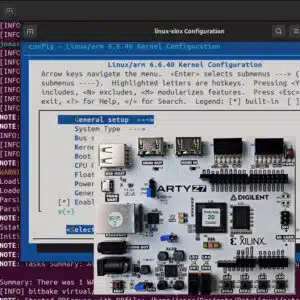
Learn to implement system-on-chip (SoC) designs using embedded Linux for AMD Xilinx FPGAs. This course gives you the skills to succeed with PetaLinux on Zynq-7000 (ARM) devices.
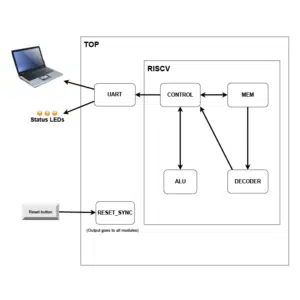
Create a reduced instruction set computer using the RISC-V processor architecture. Learn how a CPU works by implementing one in VHDL and running it on the FPGA.
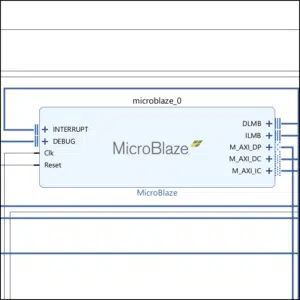
Learn how to build a system-on-chip (SoC) design by using a MicroBlaze soft-core processor, existing IP cores, and custom VHDL modules.
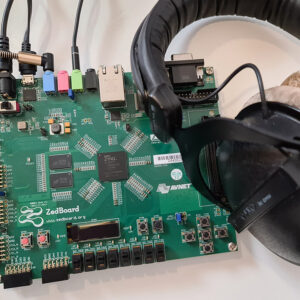
Learn to implement the I²S protocol in VHDL and configure the ADAU1761 ADC/DAC audio codec chip on the Xilinx Zedboard with bare-metal C programming.
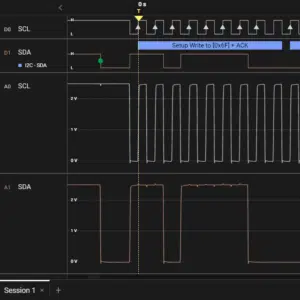
Learn to create an I²C controller (master) in VHDL and communicate with the Digilent Pmod RTCC: Real-time Clock / Calendar module.
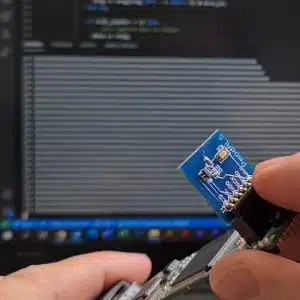
Learn to create an SPI master in VHDL for reading an ambient light sensor from an FPGA. We also make an SPI slave BFM for simulating the ADC chip.
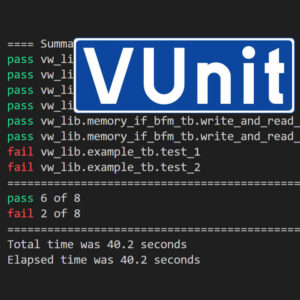
Learn to create neat testbenches and verification components using this testing framework’s VHDL libraries. Automate your simulation flow with VUnit’s Python test runner.

Learn to develop high-speed image processing systems using VHDL. See how to simulate pixel filters using JPG pictures in a VHDL testbench.
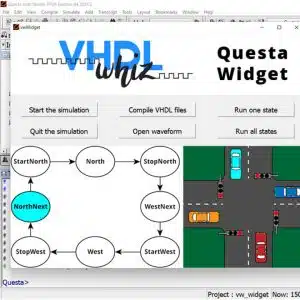
Learn the quirks of the Tool Command Language (Tcl) and see how to create a GUI widget for controlling a VHDL testbench in Questa/ModelSim.
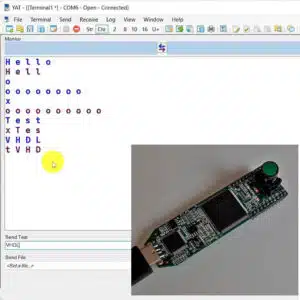
Learn how to implement run-length compression in VHDL! We will create encoder and decoder modules, a self-checking testbench, and implement it on an FPGA board.
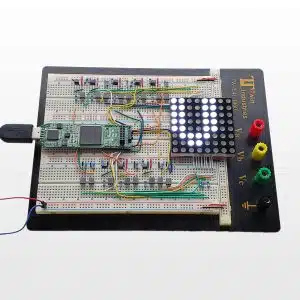
Learn how to create a VHDL project from scratch with self-checking testbenches. Dot Matrix is the most extensive course VHDLwhiz has ever made.
End of content
End of content