UVVM results in faster and better FPGA verification
How UVVM lets FPGA designers control multiple interfaces simultaneously in VHDL testbenches, reducing verification time and catching more bugs.


How UVVM lets FPGA designers control multiple interfaces simultaneously in VHDL testbenches, reducing verification time and catching more bugs.
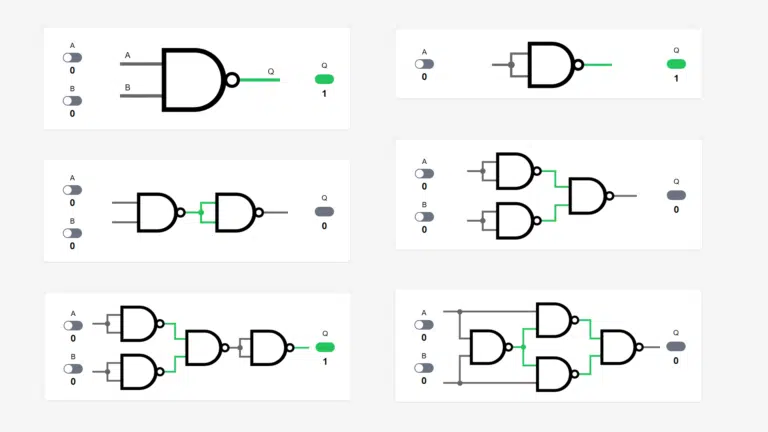
We can construct any other digital logic gate using only NAND gates as building blocks. This is why NAND is known as a universal gate. NAND logic is widely used as the foundation for designing digital circuits in modern integrated chips. Actually, NOR is also a universal gate, but NAND logic is more prevalent than…
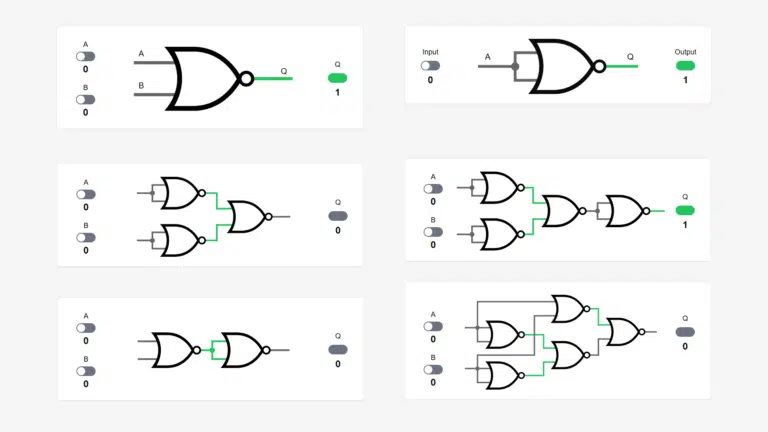
Did you know that you can construct any other digital logic gate using only NOR gates? You can also do it with NAND logic. That’s why we say that these two are universal gates. This article shows one way to implement every logic gate using NOR logic, and the schematics are interactive, like a logic…
What is Open Logic? It is an open-source VHDL library that can save you time and help you avoid vendor lock-in. Read the article written by its creator to learn more!
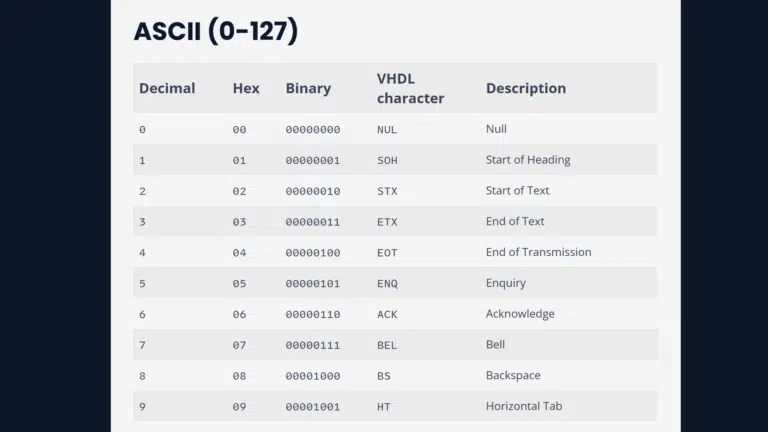
VHDL has a built-in character type that can represent ASCII and Latin-1 characters. It’s in the standard (STD) library, which is loaded by default. You don’t need to import it. Below, you can find the character type definition from the Language Reference Manual (LRM) and tables that list and explain all 256 values. ASCII (0-127)…
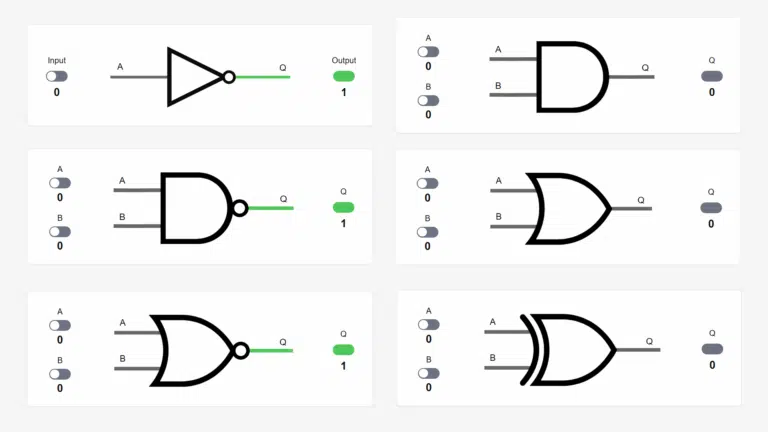
The basic logic gates NOT, AND, NAND, OR, NOR, XOR, and XNOR are fundamental building blocks in digital circuits corresponding to Boolean operators.
Play with the switches to see how the outputs change! 😀

Have fun and learn from this VHDL and FPGA design quiz with 28 questions for beginners and intermediate learners in random order.
All questions include an explanation for the correct answer that will be shown after you make your selection.
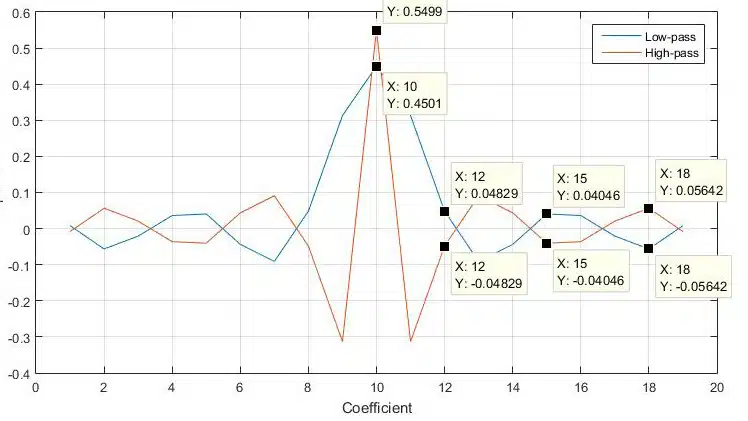
This article is by guest author Dimitar Marinov, whom I (Jonas) contacted after seeing his excellent videos about DSP filters. You can read more about Dimitry below the blog post and find a link to his YouTube channel here. But first, read on to learn about complementary finite impulse response (FIR) filters!
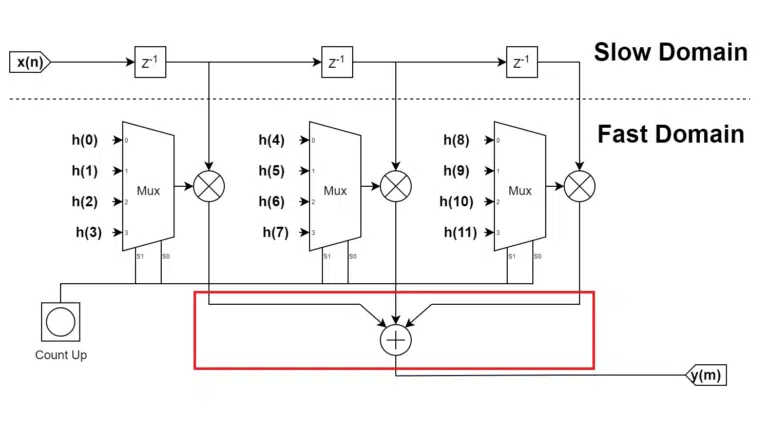
Polyphase filters are a class of specialized filters used in sample rate conversion. Whereas most FIR filters have one delay line, Polyphase filters have multiple. To understand the logic behind this, we’ll first have to dive into the topic of sample rate conversion.
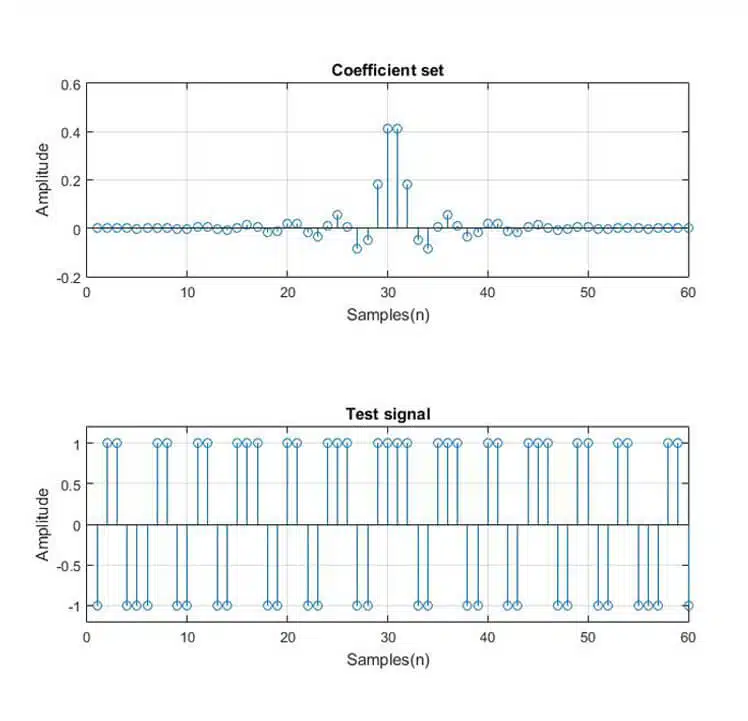
So far, the spotlight has fallen over the FIR filter design and its various forms. However, there is a problem that is just as important – how to ensure the implementation is working correctly. Whereas there are some standard techniques, it’s not always clear whether the design is error-proof. Therefore, this post discusses the most essential testing procedures and introduces a verification method that can easily incorporate them.
End of content
End of content